At the current pace of progress, closing the global gender gap will take 123 years. That target date? Roughly the year 2148 (World Economic Forum, 2025). Seven generations of women have fought for equality. Each fought battles the previous one never got to.
But nobody expected this: younger doesn’t always mean more progressive. The data on generational attitudes toward women’s rights tells a far more complicated story, one that should change how we think about progress itself.
This piece traces what each generation fought for, what they won, and where the surprising fault lines are today. Whether you’re a Boomer who marched for the ERA or a Gen Z activist organizing on TikTok, your generation’s fingerprint on women’s rights looks different than you think.
TL;DR: Each generation advanced women’s rights through different battles — from Boomers securing the right to open bank accounts independently to Millennials driving #MeToo legislation. But Ipsos 2025 data reveals Gen Z is unexpectedly divided, with 57% of Gen Z men saying equality efforts now discriminate against men. Progress isn’t a straight line. It never was.
Why Does International Women’s Day Hit Different for Every Generation?
The 2026 International Women’s Day theme is “Rights. Justice. Action. For ALL Women and Girls” (UN Women, 2026). Bold words. But what “rights” means depends entirely on when you were born.
For a Silent Generation woman, rights meant the freedom to work outside the home. For a Boomer, it meant equal pay for that work. For a Millennial, it meant safety from harassment at work. For Gen Z? It means questioning whether gender itself should define the conversation.
Most people assume each generation builds on the last, always moving forward. The data disagrees.
Fifty-seven percent of Gen Z and 60% of Millennials say equality has “gone far enough,” compared to only 43% of Boomers (Ipsos, 2025). Read that again. The youngest generations are more likely to say we’ve done enough than the generation that fought hardest for the changes we now enjoy.
What does progress actually mean when each generation defines it differently? That’s the thread we’ll pull through this entire piece.
These generational divides don’t stay at home. They show up at work every day, making management harder than it needs to be.
What Did the Silent Generation and Boomers Fight For?
Until the early 1970s, women in the United States couldn’t open a bank account or get a credit card without a male co-signer (National Women’s History Alliance). Boomers fought for the right to exist financially without a man’s permission.

The Silent Generation planted the seeds. World War II opened factory doors, and Rosie the Riveter became a symbol of capability. But when the men came home, most women were expected to step back into the kitchen. The wins were quiet. More women enrolled in college. A handful cracked into professional careers.
Then the Boomers arrived, and the earthquake hit.
Betty Friedan published The Feminine Mystique in 1963, and second-wave feminism exploded. That same year, Congress passed the Equal Pay Act. Title IX followed in 1972, guaranteeing equal athletic funding. The Pregnancy Discrimination Act arrived in 1978. Sandra Day O’Connor became the first female Supreme Court Justice in 1981.
Can you imagine needing your husband’s permission to open a bank account? That was reality for your mother or grandmother.
Our finding: When I share the bank account fact with audiences under 40, the response is always the same: stunned silence. They had no idea. And that’s the problem with generational progress. Each generation inherits rights without knowing who bled for them.
The Rights We Take for Granted
A few wins that younger generations assume always existed:
- Credit cards without male co-signers (1974)
- Mortgages in a woman’s own name
- Legal protection from pregnancy-based firing (1978)
- Equal athletic funding in schools (1972)
- The right to serve on a jury in all 50 states (1973)
The pay gap Boomers fought to close? It’s still open. According to 2024 U.S. Census Bureau data, women working full-time still earn just 81 cents for every dollar paid to men (Equal Rights Advocates, 2025). But that number masks a much harsher reality when you break it down by race.What Women Earn Per $1 Paid to White Men25¢50¢75¢$1.00Asian American96¢White85¢Black65¢Native American58¢Latina58¢Source: U.S. Census Bureau, 2024Source: U.S. Census Bureau / Equal Rights Advocates, 2024
Latina women earn 58 cents. Black women earn 65 cents. The Boomers’ fight for equal pay remains unfinished. Intersectionality reveals just how uneven the progress has been.
To understand why each generation sees equality so differently, it helps to know how generations are actually defined — and why it matters.
How Did Gen X Carry the Torch?
Women now make up 47% of the total U.S. labor force (Bureau of Labor Statistics, 2025). Gen X women helped build toward that number as the first generation where dual-income households became the norm. Gen X doesn’t get enough credit. They should.

Gen X was the first generation raised by working mothers. They experienced gender equality not as an ideal to fight for but as a daily reality to manage. That shaped how they thought about work in ways previous generations never considered.
bell hooks pushed intersectionality into mainstream feminist thought, arguing you can’t separate gender from race and class. The Riot Grrrl movement proved activism didn’t need a podium. Sometimes it needed a guitar and a photocopied zine. Gen X feminism was scrappier, louder, and less polished than what came before.
So what happened between Boomer street protests and Millennial hashtag campaigns? Gen X built the bridge.
They normalized dual-income households. They pushed for family leave policies. They proved women could lead in corporate America, even if the C-suite door only opened a crack. They didn’t always get the credit because they weren’t interested in credit. They were too busy doing the work.
What no other generation brought to the table: a gender-neutral workplace lens. Gen X didn’t see men’s work and women’s work. They saw work. Quiet shift. Massive consequences.
If that generational disconnect sounds familiar, here are 10 red flags that signal it’s happening in your organization.
What Did Millennials Change About the Conversation?
In the seven years since #MeToo went viral, 25 states and Washington D.C. have passed more than 80 anti-harassment bills (Equal Rights Advocates, 2024). Millennials turned outrage into legislation.
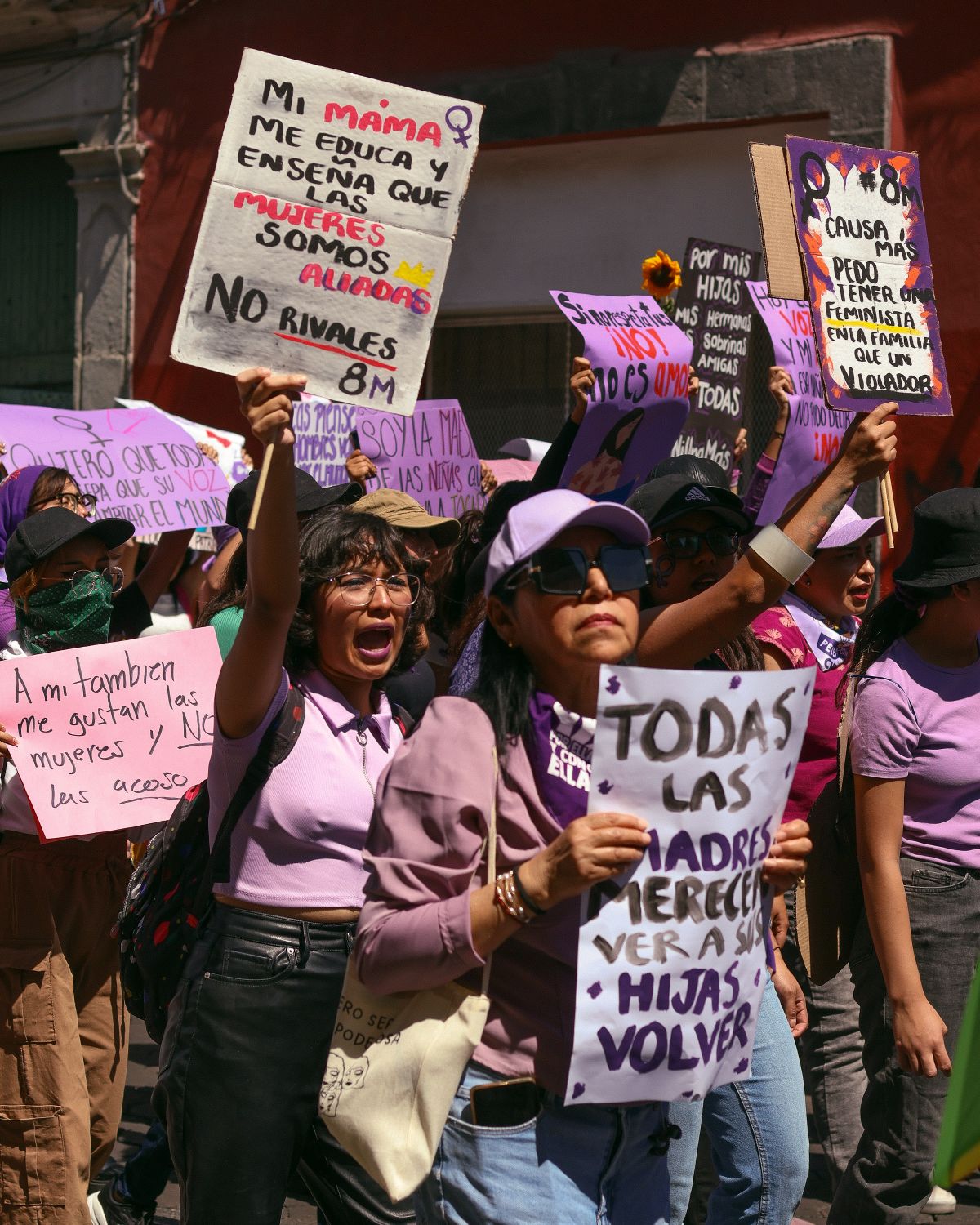
#MeToo wasn’t a hashtag. It was a reckoning. Criminal convictions. Corporate policy overhauls. More workplace harassment legislation passed in five years than in the previous three decades combined. The cultural shift ran deep, too. Seventy percent of Americans now say harassers are more likely to be held responsible than five years ago (Pew Research Center, 2022).
Millennials also expanded what feminism means. They championed transgender visibility and pushed corporations to adopt inclusive policies. Something else happened that had never happened before: Millennial men started calling themselves feminist at roughly equal rates as Millennial women.
But did #MeToo actually change anything in the corner office? The numbers are mixed.The Leadership Pipeline Leak48%40%36%29%11%Entry LevelManagerVPC-SuiteF500 CEOSource: McKinsey / LeanIn, 2025Source: McKinsey / LeanIn “Women in the Workplace,” 2025
Women hold 29% of C-suite positions today, up from 17% a decade ago (McKinsey, 2025). That looks like progress. But as the chart shows, the pipeline leaks at every level. The first promotion is where the biggest damage happens.
The Generation That Said “Equality Is the Baseline”
Millennials shifted the conversation from “fighting for rights” to “expecting rights.” They didn’t ask if women belonged in leadership. They asked why there weren’t more.
McKinsey’s 2025 Women in the Workplace report found that only 81 women are promoted to manager for every 100 men. That ratio drops to 74 women of color per 100 men (McKinsey/LeanIn, 2025). This “broken rung” at the first step of leadership creates a pipeline deficit that compounds at every level above it.
Fifty-five out of 500 Fortune 500 companies now have female CEOs. That’s 11%. A record. And still remarkably low.
Women earn 59% of bachelor’s degrees and 63% of master’s degrees. They outperform men in education at every level. Yet only 48% of entry-level corporate employees are women. The talent is there. The pathway isn’t.
This shift in expectations runs deep. It’s part of how Millennials define success differently from the generations before them.
Where Does Gen Z Actually Stand on Women’s Rights?
Despite being called the most progressive generation, 57% of Gen Z men across 31 countries say promoting women’s equality has gone so far it now discriminates against men (Ipsos, 2025). The assumption that younger means more progressive? The data says otherwise.
Fifty-three percent of Gen Z women identify as feminist, compared to just 32% of Gen Z men. That 21-percentage-point gap is the widest of any generation (King’s College London, 2025). And 59% of Gen Z say there’s tension between men and women today, the highest of any generation.
So Gen Z is the most progressive generation on women’s rights, right? It’s far more complicated than that.Who Says Equality Has Gone Far Enough?20%40%60%43%Boomers60%Millennials57%Gen ZSource: Ipsos, 2025Source: Ipsos International Women’s Day Survey, 2025
Gen Z has expanded feminism to include climate justice, LGBTQ+ rights, and nonbinary identity. They’ve pushed boundaries their parents never imagined. But within their own generation, there’s a gender war brewing that older generations didn’t experience.
The Biggest Gender Gap Is Inside One Generation
This one genuinely caught me off guard. Ask Boomers whether stay-at-home dads are “less of a man.” Only 11% say yes. Ask Gen Z the same question? Thirty-one percent (Ipsos, 2025).
The youngest generation holds more traditional views on this metric than their grandparents. That isn’t a typo. It’s a trend.
A 2025 Ipsos/King’s College London study found that Gen Z men and women are more divided on gender equality than any other generation, with 60% of Gen Z men saying men are expected to do too much for equality (KCL, 2025). That wasn’t supposed to happen. Each generation is supposed to pick up where the last one left off. Except they didn’t.
Meanwhile, 61% of Gen Z women report experiencing workplace discrimination, compared to 48% of Gen Z men. The gap isn’t between generations. It’s within one.
How do we bridge a divide that exists inside a single generation? That’s the question every workplace, family, and community needs to answer.
For a deeper look at this generation, I put together the top 10 questions I get asked about Gen Z. The answers might surprise you.
What Can Generations Learn From Each Other About Women’s Rights?
Sixty percent of people globally agree that having more women in leadership positions would improve society (Ipsos, 2026). The consensus exists. But only when generations stop talking past each other does anything actually change.
Each generation brings something the others lack. The problem is, nobody’s comparing notes.
Boomers have the stories. When they describe picketing for the Equal Rights Amendment or getting turned away from a bank, they ground abstract “rights” in lived experience. That kind of storytelling sticks in a way no statistic can.
Gen X brought the intellectual framework that keeps feminism honest. Intersectionality isn’t academic theory. It’s what prevents the movement from only serving privileged women.
Then there’s Millennials, who did something no previous generation managed: they got men to publicly adopt the feminist label at scale. They also built the digital accountability infrastructure that made #MeToo possible.
And Gen Z? They keep expanding who gets included. Nonbinary perspectives, trans rights, identities that older feminists didn’t always account for. It creates friction. It also creates a more complete movement.
The most productive conversations I’ve seen happen when generations stop lecturing each other and start comparing experiences.
A Framework for Generational Bridge-Building
From the stage: In my years speaking to multigenerational audiences about gender and generational identity, I’ve found three principles that consistently open productive dialogue, even in rooms with real tension.
First, lead with stories instead of statistics. Every generation responds to narrative. The credit card fact lands with Gen Z because it’s visceral and specific. A Boomer sharing what it felt like to be denied a mortgage hits harder than any chart.
Second, acknowledge the gap without judgment. Gen Z men feeling threatened by equality isn’t something to dismiss or mock. It’s something to understand and address head-on. Shaming doesn’t change minds. Curiosity does.
Third, find the shared goal. Every generation, every single one, wants their daughters, sisters, and partners to have more opportunity than they did. Start there. The common ground is bigger than the divide.
If you want to understand how these gaps form in the first place, here’s why the “Ok Boomer” phrase was born — and what to do about it.
What Will Gen Alpha Inherit?
The World Economic Forum’s 2025 Global Gender Gap Report found that only 68.8% of the global gender gap has been closed, leaving 31.2% still to go (WEF, 2025). At current rates, full parity is 123 years away.Global Gender Gap: How Much Has Been Closed?68.8%ClosedAt current pace: 123 years to full paritySource: World Economic Forum, 2025Source: World Economic Forum Global Gender Gap Report, 2025
No nation on earth has achieved full legal gender parity. Women hold just 64% of the legal rights men hold worldwide. And women still make up only 28% of the global STEM workforce (UNESCO/WEF, 2025).
Gen Alpha is the first generation raised entirely in a post-#MeToo world. But “raised in” doesn’t automatically mean “shaped by.” Their attitudes will be formed by Millennial and Gen Z parents, the very generations currently most divided on this topic.

What kind of world will Gen Alpha inherit? That depends on which generation’s definition of progress wins out. Or better yet, whether we can build a definition that works across all of them.
The question isn’t just about Gen Alpha. It’s whether the “problem” with any generation is really the generation itself.
Frequently Asked Questions
What generation started the women’s rights movement?
The organized movement traces to the 1848 Seneca Falls Convention, led by women of the Greatest Generation era. But Baby Boomers drove the most sweeping legislative changes, securing the Equal Pay Act (1963), Title IX (1972), and the Pregnancy Discrimination Act (1978) (National Women’s History Alliance).
Why is Gen Z less supportive of feminism than older generations?
Ipsos 2025 data shows 57% of Gen Z men believe equality efforts now discriminate against men. This is partly driven by growing feelings that society has become more hostile toward men. Fifty-nine percent of Gen Z say there’s tension between genders today, the highest of any generation (Ipsos, 2025).
What did Baby Boomers do for women’s rights?
Boomers led second-wave feminism, securing women’s right to open bank accounts independently (1974), workplace pregnancy protections (1978), and equal athletic funding through Title IX (1972). Today, women earn 85 cents per dollar, up from roughly 60 cents when the Equal Pay Act passed in 1963 (Pew Research, 2025).
How has #MeToo changed workplaces?
Since #MeToo went viral in 2017, 25 states and D.C. have passed 80+ anti-harassment bills. EEOC sexual harassment claims initially spiked from 6,696 (2017) to 7,609 (2018), and 70% of Americans now say harassers are more likely to be held accountable (Pew Research, 2022).
What is the theme of International Women’s Day 2026?
The 2026 theme is “Rights. Justice. Action. For ALL Women and Girls.” It focuses on dismantling discriminatory laws, strengthening legal protections, and ending harmful social norms that limit women and girls globally. The UN Commission on the Status of Women’s 70th session accompanies this year’s observance (UN Women, 2026).
Conclusion
I keep coming back to the bank account fact. A woman in 1970 couldn’t sign for her own credit card. My mother’s generation fixed that. And half of Gen Z has no idea it ever happened.
That’s not a criticism of Gen Z. It’s the nature of generational progress. You inherit rights without inheriting the memory of how they were won. And when you don’t know what was fought for, it’s easy to assume the fight is over.
It isn’t. The 57% statistic alone should tell us that.
This International Women’s Day, skip the Instagram post. Instead, ask your grandmother what she wasn’t allowed to do. Ask your Gen Z colleague what worries her. Sit in the discomfort of how different those answers are. That conversation is worth more than any hashtag.
Ready to go deeper? Explore all generational insights on the blog.